FRU Reports Strong Growth in Women’s Rugby Across Fiji
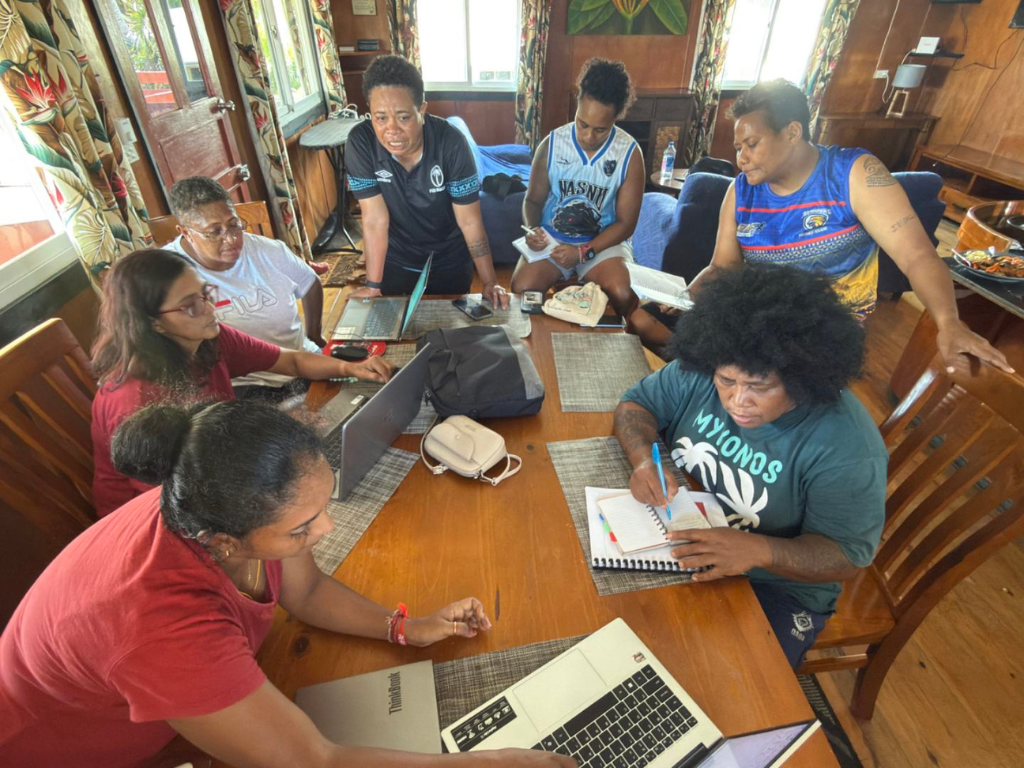
Fiji Rugby Union Women’s Development Coordinator Kuini Vuli says women’s rugby in Fiji continues to grow steadily, with major improvements already being seen in governance, coaching, management and player participation across the country.
Speaking on the progress of the women’s game, Ms Vuli highlighted that nearly all unions now have women represented at executive level, marking an increase of almost 15 percent from last year.
“Only two unions are yet to fully meet compliance requirements, with efforts continuing to ensure all unions strengthen women’s representation within their structures,” she said.
She also noted significant progress in coaching and management, with a noticeable rise in the number of female coaches and managers involved in provincial competitions this season.
“This year, people will see more women coaches on the ground, supported by experienced male technical advisors. We are also seeing more women stepping into management roles, which is very encouraging for the growth of the game,” Ms Vuli said.
In terms of participation, women’s rugby numbers continue to rise.
Another key focus of the women’s programme, she added, is the development of female strength and conditioning personnel, with plans to further strengthen this area later in the year.
Ms Vuli shared that last year, close to 4,000 female players participated throughout the season in organized competition, while this year’s major focus has shifted towards strengthening the women’s club competition.
Previously, only Nadi and Ba operated women’s club competitions. However, this year has seen major expansion, with competitions now active in Macuata, Bua, Cakaudrove and the Central Division. The Central women’s competition alone currently features more than 16 teams.
Ms Vuli said the club competition plays a vital role in player development, especially in preparing athletes physically before provincial competitions begin.
“When players are involved in club games before the provincial season, they are already conditioned and match-ready. It helps reduce injuries, improves fitness and gives players more opportunities to develop and enjoy the game,” she explained.
Despite the progress, challenges remain in rural areas, where distance and migration to urban centres continue to affect participation. However, the union is now exploring ways to allow players from rural communities to form teams in urban centres where many now live and study.
Ms Vuli described the first half of the year as highly positive for women’s rugby and said continued support would now focus on unions still needing assistance to further grow the women’s game