Fiji Coaches Gain Valuable Insights Through Hurricanes Immersion Workshop

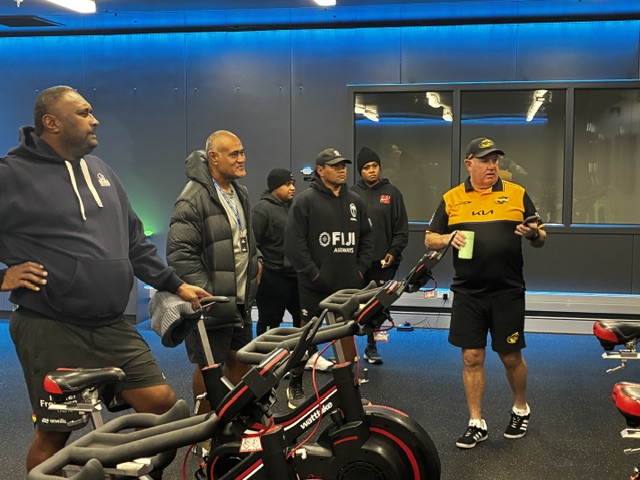
Fijian rugby coaches have returned from the 2026 IBP Fiji Hurricanes Immersion Workshop with new knowledge, practical tools, and fresh perspectives after spending time within one of New Zealand’s leading high-performance rugby environments.
The workshop, supported by World Rugby through its Impact Beyond Pasifika (IBP) High Performance Coach Development Programme, provided five Fijian coaches — three male and two female coaches, Rupeni Nasiga, Cohan Politini, David Dakuitoga, Adi Fika Vucago and Maraia Bulewa — with an intensive week-long attachment at the New Zealand Campus of Innovation and Sport (NZCIS) in Wellington.
As part of the programme, participants were immersed in a world-class high-performance environment, gaining firsthand exposure to the daily operations of the Wellington Hurricanes, current leaders in Super Rugby. The experience allowed coaches to observe how technical, tactical, physical, and mental performance elements are integrated to support player development and team success.
A major highlight for participants was the opportunity to sit in on coaching meetings, planning sessions, and team environments, gaining valuable insights into how elite programmes operate on a daily basis. Coaches praised the Hurricanes’ collaborative approach, noting the strong alignment between coaching staff and support personnel, as well as the welcoming culture that encouraged learning and open discussion.
Fiji Rugby Union General Manager High Performance, Naca Cawanibuka, said the initiative was designed to strengthen high-performance coaching capability within Fiji Rugby by equipping coaches with practical knowledge, skills, and experiences in key areas of programme leadership and performance development.
“The experience provided valuable insights into elite coaching practices, programme leadership, athlete management, performance planning, and the integration of multidisciplinary support services,” Cawanibuka said.
“The programme has been specifically designed to strengthen high-performance coaching capability within Fiji Rugby by equipping coaches with practical knowledge, skills, and experiences in key areas including collective planning, effective communication, player welfare, leadership, people management, culture development, and influencing player and staff behaviours to drive performance outcomes.”
Many participants identified talent identification, player pathways, and long-term athlete development as key takeaways that could be applied within Fiji’s rugby landscape. Others highlighted the detailed planning processes, coaching methods, and attention to detail demonstrated throughout the programme.
Importantly, Cawanibuka emphasised that the initiative extends beyond observation, with participating coaches now being actively monitored and supported as they implement their learnings within provincial and development environments.
“Their progress is being assessed through their ability to plan, lead, communicate, and influence player development while enhancing their technical, tactical, leadership, and performance-building capabilities as rugby programme leaders,” he said.
“The objective of the programme is not simply to observe high-performance environments, but to engage meaningfully in learning, build professional networks, exchange ideas with leading practitioners, and apply best-practice methodologies within Fiji Rugby’s provincial and pathway systems.”
While feedback from participants was overwhelmingly positive, coaches expressed interest in future workshops providing more in-depth coverage of game models, skill execution, mental preparation, and game-day operations.
The focus of the programme aligns directly with Fiji Rugby’s strategic high-performance priorities, targeting critical areas required to strengthen the coaching pathway and ultimately improve player development and team performance across all levels of the game.
Overall, the workshop was described as an eye-opening and highly rewarding experience that strengthened coaching capability and reinforced the value of immersive learning opportunities. Participants also called for similar programmes to continue in the future, helping further develop coaching expertise and high-performance rugby pathways in Fiji.
Cawanibuka acknowledged the contribution of World Rugby, NZCIS, and the Wellington Hurricanes in making the programme possible.
“Fiji Rugby extends its gratitude to World Rugby through the Impact Beyond Pasifika initiative, the New Zealand Campus of Innovation and Sport, and the Wellington Hurricanes organisation for their generosity, hospitality, and willingness to share their knowledge and expertise with our coaches,” he said.
“Investing in our coaches is investing in the future success of Fiji Rugby.”
The initiative forms part of ongoing efforts to support coach development and strengthen rugby performance systems across the Pacific region.