Cabe na Marama: Empowering Women to Shape the Future of Rugby in Fiji
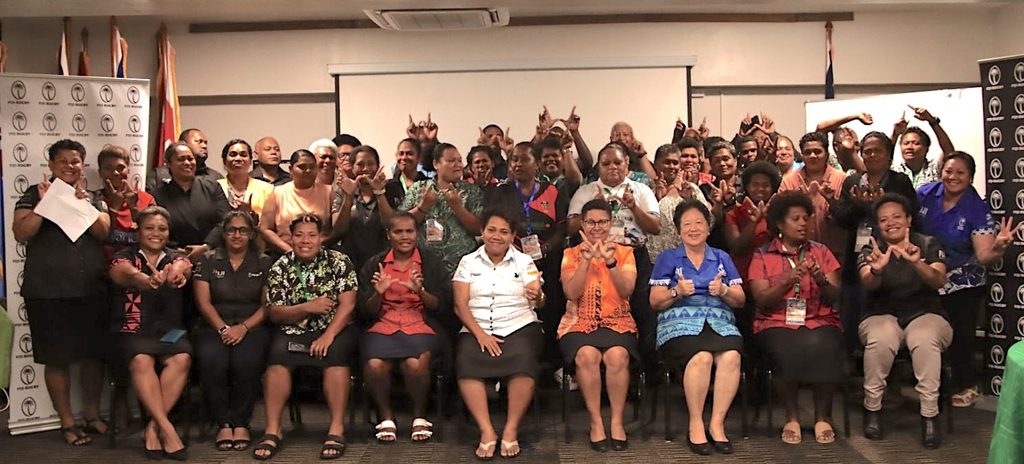
Women leaders from across Fiji’s rugby fraternity gathered in Suva for the opening of the two-day Women’s Rugby Conference, aimed at strengthening women’s participation, leadership and opportunities at all levels of the game.
Held at the Pacific Theological College (PTC), the conference brings together women rugby executives from Fiji Rugby’s 26. Member Unions, the Fiji Secondary Schools Rugby Union (FSSRU) and the Fiji Primary Rugby Union (FPRU).
Under the theme “Cabe na Marama – Rise of the Women Leaders,” the gathering provides a platform for women to share experiences, address challenges and contribute to shaping the future of women’s rugby in Fiji.
The conference highlights the importance of creating an environment where women are not only supported as players but are also empowered to take on leadership roles in coaching, officiating, team management and rugby administration.
Among the key issues discussed was the need for greater acceptance and recognition of women in rugby, particularly in roles traditionally dominated by men.
Speaking during the conference, Fiji Rugby Chief Operations Officer Talemo Waqa encouraged women leaders to become stronger advocates for one another and take an active role in creating opportunities for women within their respective unions.
“Let’s be the first advocates of women’s rugby, because sometimes we are the ones that are negating it,” he told participants.
Waqa raised concerns over resistance towards female match officials, revealing that some teams had reportedly objected to having a woman referee officiate their final.
He noted that some of these objections had reportedly come from women themselves, highlighting the need for a collective change in attitudes towards female participation and leadership in the sport.
The discussions also highlighted the challenges women face in balancing their rugby commitments with family responsibilities.
As part of efforts to address these challenges, Fiji Rugby has introduced financial stipends for women coaches and team managers involved in provincial Marama and Ranadi competitions.
Waqa explained that the initiative followed a survey which revealed that some women faced criticism at home over the time and effort they dedicated to rugby.
The financial support is intended to recognise their contributions while helping ease some of the pressures associated with their involvement in the game.
Another key focus of the conference was the importance of strengthening coaching pathways and encouraging more women to pursue qualifications and leadership positions within their unions.
Waqa acknowledged that some unions remained reluctant to appoint women as coaches and team managers, encouraging female executives to advocate for greater opportunities.
He also encouraged unions to consider appointing women as head coaches, with experienced male coaches providing technical support where needed.
Progress is already being made in coaching development, with resources specifically focused on women’s rugby now available through the World Rugby Passport programme.
These resources were developed through consultation with experienced female coaches to better understand the specific needs of coaching women.
Fiji Rugby is also looking to strengthen its advanced coaching pathways, with a dedicated section on coaching women expected to be included in its upcoming Level Four coaching course.
The progress of two female coaches from Tailevu, who have completed Level Two accreditation and are working towards Level Three, was also highlighted as an encouraging example of women advancing through the coaching pathway.
Their achievements reflect the opportunities available for more women to develop their skills and contribute to the growth of rugby within their communities.
As women’s rugby continues to grow across Fiji, the conference reinforces the importance of ensuring that development extends beyond the playing field.
Greater representation of women in leadership, coaching, officiating and administration remains essential to building a more inclusive and sustainable future for the sport.
Through Cabe na Marama, women leaders are being encouraged to strengthen their voices, support one another and take greater ownership of the future of women’s rugby in Fiji.
The two-day gathering represents an important opportunity to build stronger connections, inspire future generations and ensure women continue to play a meaningful role in shaping the direction of the game.
Cabe na Marama – Rise of the Women Leaders.