Fiji Shows Character To Defeat Japan 34–28 In Thrilling Test Match
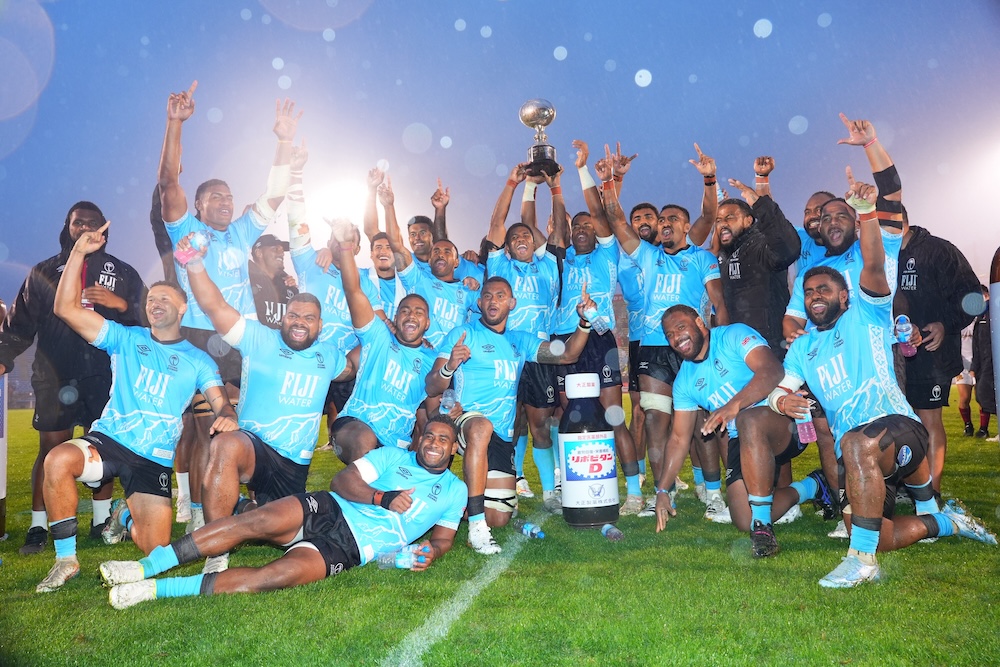
The Fiji Water Flying Fijians produced a courageous and disciplined performance to defeat Japan 34–28 in a thrilling international Test match, overcoming the challenge of playing 20 minutes with 14 men to secure a memorable victory on Japanese soil.
In a contest that was evenly poised at 21–21 at halftime, Fiji demonstrated resilience, tactical discipline and composure under pressure to outlast the Brave Blossoms and deliver a winning start for newly appointed head coach Jake White.
The victory carried added significance as Japan celebrated 100 years of rugby, with Fiji spoiling the hosts’ centenary celebrations while gaining valuable momentum ahead of a demanding international campaign.
FIJI OVERCOMES EARLY SETBACK
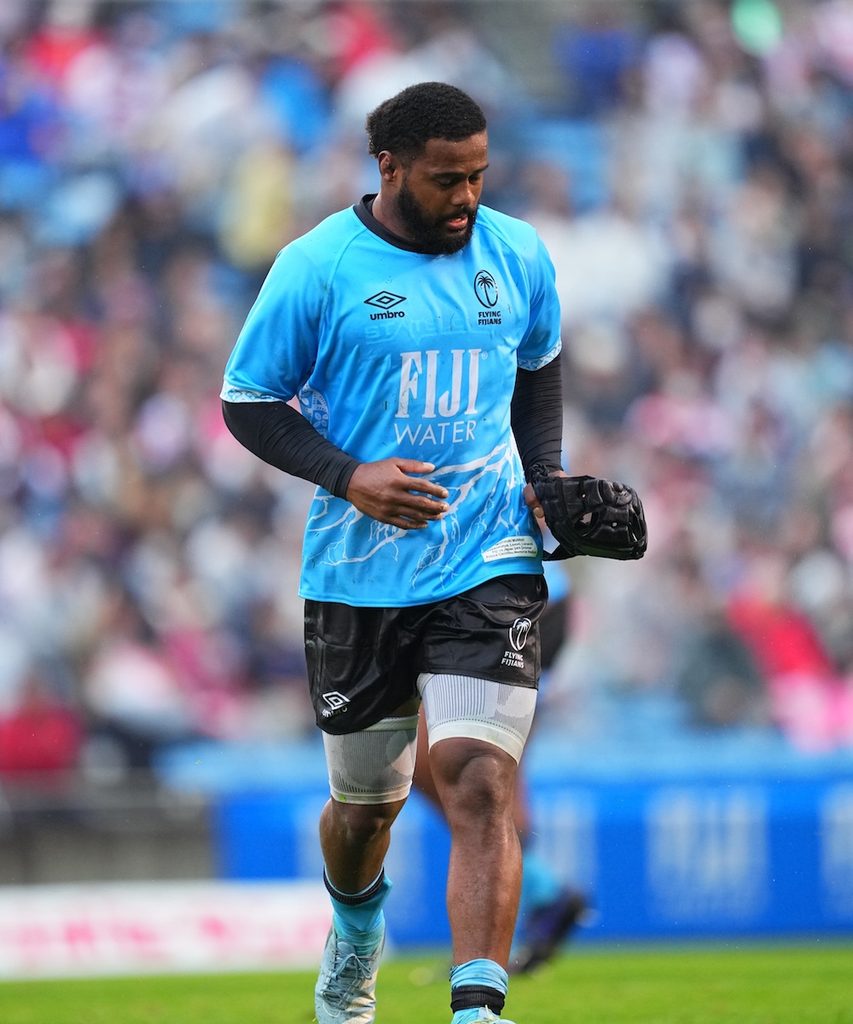
The match took a significant turn in the 34th minute when Fiji’s Motikai Murray was shown a yellow card for a dangerous tackle. The decision was subsequently upgraded to a red card.
Despite the numerical disadvantage, Fiji refused to surrender its attacking ambition or defensive intensity. With the scores locked at 21–21 at the interval, the visitors faced a difficult second half against a Japanese side determined to capitalize on its extra player.
However, Fiji displayed remarkable determination, maintaining its defensive organization while making the most of its attacking opportunities.
Tries from Kitione Salawa, captain Tevita Ikanivere, Tuidraki Samusamuvodre and Terio Tamani contributed to Fiji’s winning performance, with Isaiah Armstrong-Ravula providing conversions and Ben Volavola contributing penalty goals.
The Flying Fijians ultimately held their nerve to secure a six-point victory, underlining their ability to manage a high-pressure Test match despite significant adversity.
STATISTICS HIGHLIGHT FIJI’S DEFENSIVE EFFORT
While Japan enjoyed a slight advantage in possession and territory, Fiji’s defensive workload and ability to force turnovers proved crucial.
According to the official full-time match statistics, Japan recorded 51 percent possession and 55 percent territory, compared with Fiji’s 49 percent and 45 percent respectively.
Fiji was required to make 146 tackles, compared with Japan’s 129, reflecting the considerable defensive pressure absorbed by the visitors.
More importantly, Fiji won 10 turnovers compared with Japan’s four, demonstrating the effectiveness of its defensive contest at the breakdown and its ability to disrupt Japanese possession.
The Flying Fijians also conceded just three penalties throughout the contest, compared with Japan’s 10; a particularly significant statistic given that Fiji played much of the match with one fewer player.
Although Japan gained more metres, recording 447 compared with Fiji’s 313, and narrowly edged the defenders-beaten count 26–23, the visitors were more effective in converting critical moments into points.
Fiji’s scrum remained solid, winning all five of its scrums, while Japan won five and lost one. The lineout presented greater challenges for the visitors, who won seven but lost six, compared with Japan’s seven won and one lost.
Ultimately, Fiji’s ability to secure turnovers, maintain discipline and manage possession during the closing stages proved decisive.
DISCIPLINE SHOWS REMARKABLE IMPROVEMENT FROM PACIFIC NATIONS CUP
One of the most significant developments in the Flying Fijians’ victory was the dramatic improvement in their discipline compared with the two sides’ previous encounter in the Pacific Nations Cup last month.
During the PNC finals, which Japan won 20–15, Fiji conceded 16 penalties and received a yellow card, with repeated infringements placing the team under considerable pressure.
However, in their latest encounter, Fiji reduced its penalty count to just three, an impressive 81.25 percent reduction, representing 13 fewer penalties than in the previous meeting.
The improvement was particularly noteworthy given that Fiji was reduced to 14 players following Murray’s 34th-minute yellow card, which was subsequently upgraded to red.
Despite the numerical disadvantage, the Flying Fijians maintained their defensive structure and avoided repeated infringements, limiting Japan’s opportunities to gain territory or score points from penalties.
Fiji also improved its turnover count from nine in the PNC encounter to 10 in the latest Test, reinforcing the effectiveness of its defensive pressure and breakdown contest.
The contrast between the two performances was significant. Just one month after suffering a five-point defeat, Fiji returned to defeat the same opposition by six points, scoring 34 points compared with 15 in their previous meeting.
The result represented an 11-point turnaround in the winning margin between the two encounters.
For head coach Jake White, the improvement in discipline provides an encouraging early indication of the team’s ability to execute a more controlled and structured approach to international rugby.
While one performance cannot establish a lasting trend, the reduction in penalties, combined with Fiji’s improved game management in the closing stages, suggests that the players are responding positively to the coaching staff’s emphasis on control and decision-making.
The challenge for the Flying Fijians will now be to maintain these standards against France, Ireland and Italy, where discipline and the ability to manage pressure will be equally important.
WHITE PRAISES CONTROL AND COMPOSURE
For head coach Jake White, the victory represented more than just a successful result. It was an encouraging first step towards developing a more controlled and tactically disciplined Flying Fijians side.
Returning to international coaching after a 20-year absence, White expressed both excitement and relief following the final whistle.
“I’m very excited. I mean, I’m relieved as well. We just had a short time with this team,” White said.
“I haven’t coached international rugby for 20 years, so I was very excited. I was like a little boy in a candy store today.”
White acknowledged the importance of beginning the tour with a victory, particularly given the limited preparation time available to the coaching staff.
“I’m glad the boys stuck it out because, obviously, it’s an important win for us to start our tour with a win.”
Beyond the result, White was particularly pleased with Fiji’s game management during the final 10 to 15 minutes.
He emphasized that while Fiji’s natural attacking flair remains one of its greatest strengths, the team must also develop the ability to control matches and make calculated decisions under pressure.
“The most important thing we try to do is we just try to get some control,” he explained.
“I think everyone knows that Fiji can score some really good tries. And I think the way we played in the last sort of 10, 15 minutes is something that’s been lacking with Fiji for a long time.”
White said the team’s willingness to move away from its traditional instinct to attack from anywhere on the field was particularly encouraging.
“Usually what tends to happen is we try and run from everywhere, and we try and play flair rugby. So, I’m really happy that the guys understood we need to get control.”
His assessment highlighted an important development for Fiji; combining its internationally recognized attacking ability with improved tactical awareness and composure during critical stages of Test rugby.
IKANIVERE PROUD OF TEAM’S CHARACTER
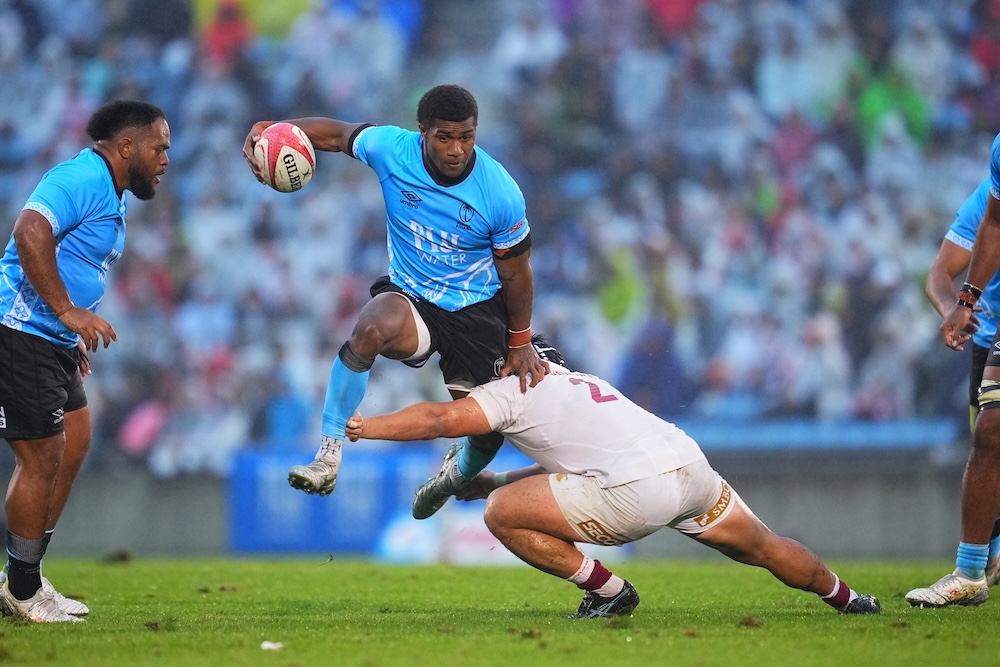
Flying Fijians captain Tevita Ikanivere praised his teammates for their determination and commitment, describing the victory as a proud moment for the squad.
The captain revealed that Japan’s previous victory over Fiji in the Pacific Nations Cup had provided additional motivation heading into the encounter.
“We talked about coming into the week that the Japanese boys took something away from us one month ago and took the PNC away from us,” Ikanivere said.
He explained that the significance of Japan’s centenary celebration had also featured prominently in the team’s preparation.
“We talked about 100 years. It only comes once every 100 years. And we talked about taking this away from them.”
Ikanivere credited the team’s collective effort and tactical preparation, particularly the pressure applied by Fiji’s outside backs.
“I’m just proud of how the wingers worked today. The amount of pressure they put their wingers under, it caused a lot of turnovers, and it led to points.”
For the captain, the result reflected the players’ willingness to execute their game plan and fight for one another despite the challenges encountered during the match.
JONES ACKNOWLEDGES FIJI’S SUPERIORITY
Japan head coach Eddie Jones congratulated Fiji and his former coaching colleague Jake White, acknowledging that the visitors had performed better in several critical areas of the contest.
“Firstly, congratulations to Jake and the Fiji team,” Jones said.
“I’m glad to see him back coaching at international level.”
Jones admitted that Japan had struggled to compete effectively in the aerial contest and at the breakdown, two areas he identified as decisive.
“We were beaten in the air, beaten on the ground. We lost two areas of the game.”
The experienced coach also acknowledged improvements in Fiji’s breakdown contest and scrum performance compared with the teams’ previous encounter.
“I think they’re better at contesting the breakdown today, much better at contesting the breakdown, and we weren’t able to get the advantage in the scrum that we had in the previous game.”
Jones accepted responsibility for Japan’s shortcomings, admitting that the coaching staff needed to improve its preparation ahead of the team’s upcoming European Tests.
“I feel I’ve let the players down. We haven’t prepared them well enough in those areas.”
His comments reflected the disappointment within the Japanese camp after failing to deliver a victory on a significant occasion for the country’s rugby history.
DEARNS DISAPPOINTED WITH JAPAN’S PERFORMANCE
Japan co-captain Warner Dearns echoed his coach’s frustration, admitting that the Brave Blossoms had failed to produce the standard of rugby expected of them.
“Simply very disappointed. We didn’t play like Japan,” Dearns said.
He pointed to unforced errors and lost possession as major contributors to the defeat.
“We made easy mistakes. We gave the ball away to the opposition.”
Despite the disappointment, Dearns acknowledged the significance of representing Japan during its centenary celebrations and expressed his determination to see the national team grow stronger.
He also thanked the supporters who attended the match and backed the Brave Blossoms throughout the contest.
FIJI BUILDS MOMENTUM AHEAD OF TOUGHER TESTS
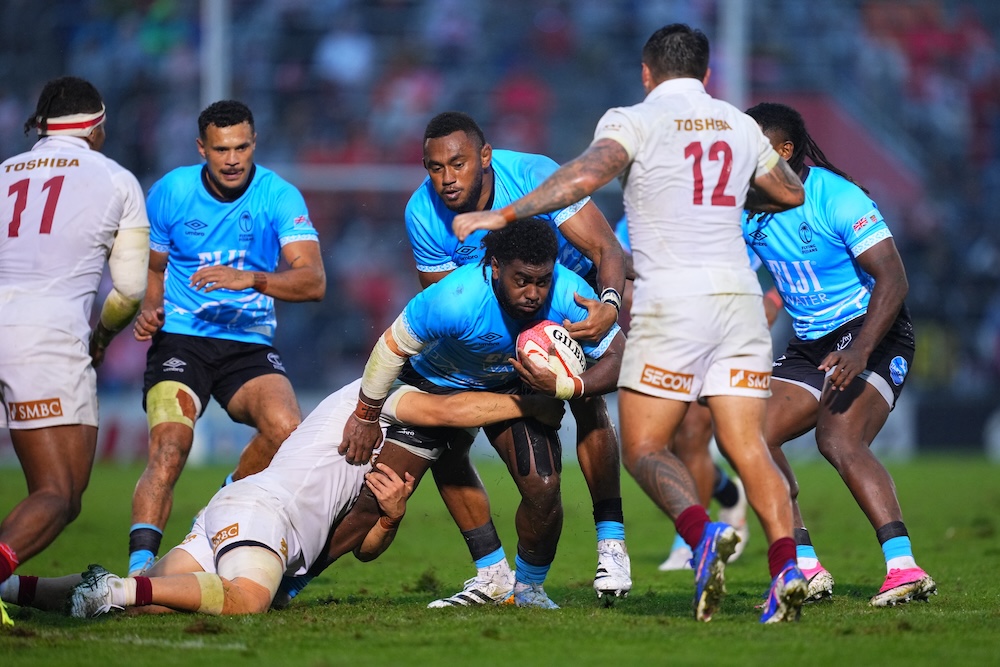
The victory provides an important confidence boost for the Flying Fijians as they prepare for a challenging series of international fixtures against some of the world’s leading rugby nations.
White acknowledged that the level of opposition would increase considerably, with France, Ireland and Italy awaiting Fiji.
“We’ve got a tough draw. We’ve got France, number three in the world. We’ve got Ireland, number four in the world, and then we’ve got Italy,” he said.
“So, it’s not going to get any easier, but obviously a win today will give us a lot of confidence.”
For Fiji, the performance against Japan offered encouraging signs of progress, particularly in defensive commitment, breakdown effectiveness, discipline and tactical game management.
The challenge now will be to build on those foundations while preserving the attacking creativity that has long defined Fijian rugby.
A VICTORY BUILT ON CHARACTER
While the six-point winning margin reflected the competitiveness of the encounter, the circumstances surrounding Fiji’s victory made the result particularly significant.
Reduced to 14 players before halftime, the Flying Fijians were forced to defend for extended periods, adapt their attacking approach and manage the closing stages with composure.
Their ability to concede only three penalties, win 10 turnovers and remain competitive despite Japan’s territorial advantage demonstrated a level of discipline and determination that will be essential against higher-ranked opposition.
For White and his coaching staff, the performance provides a promising foundation upon which to build.
For Ikanivere and his players, it represents a statement of resilience and collective belief.
And for Flying Fijians supporters, the victory offers renewed optimism as the national side begins a new chapter under its experienced head coach.
Final Score: Fiji 34 – Japan 28
Halftime: Fiji 21 – Japan 21